
From Thakuma's Trunk to Today: Traditional Bengali Jewelry, Its History and Modern Styling
Share
In many Bengali homes there is a trunk that belongs to a grandmother. Open it on the morning of a wedding, and the room seems to change. Out come the folded Banarasis and the red-bordered garads, the small velvet boxes, the jewelry wrapped in soft cloth: a heavy sita haar, a pair of jhumkos, the shakha and pola that marked a marriage decades ago.
Every piece carries a story. And every generation of Bengali women has found its own way to tell it.
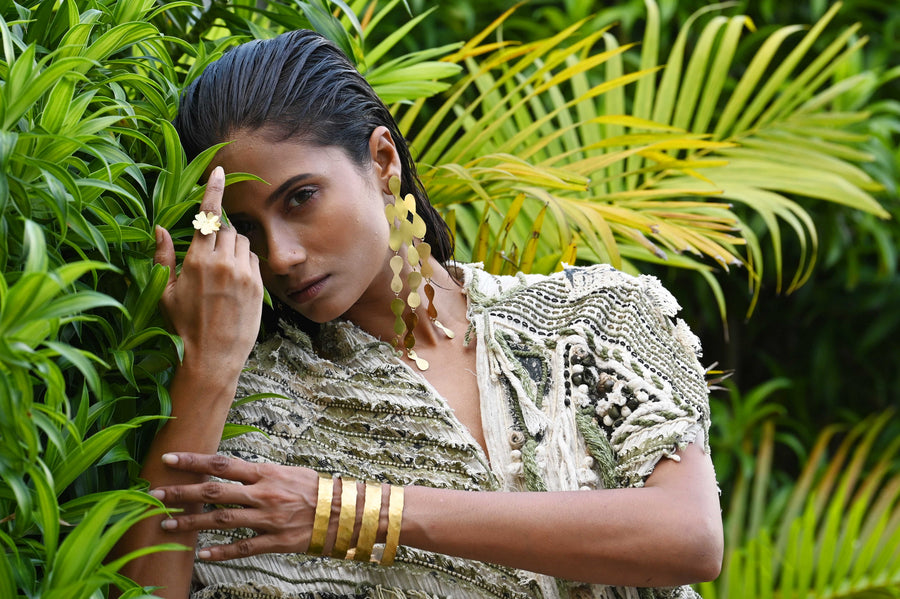
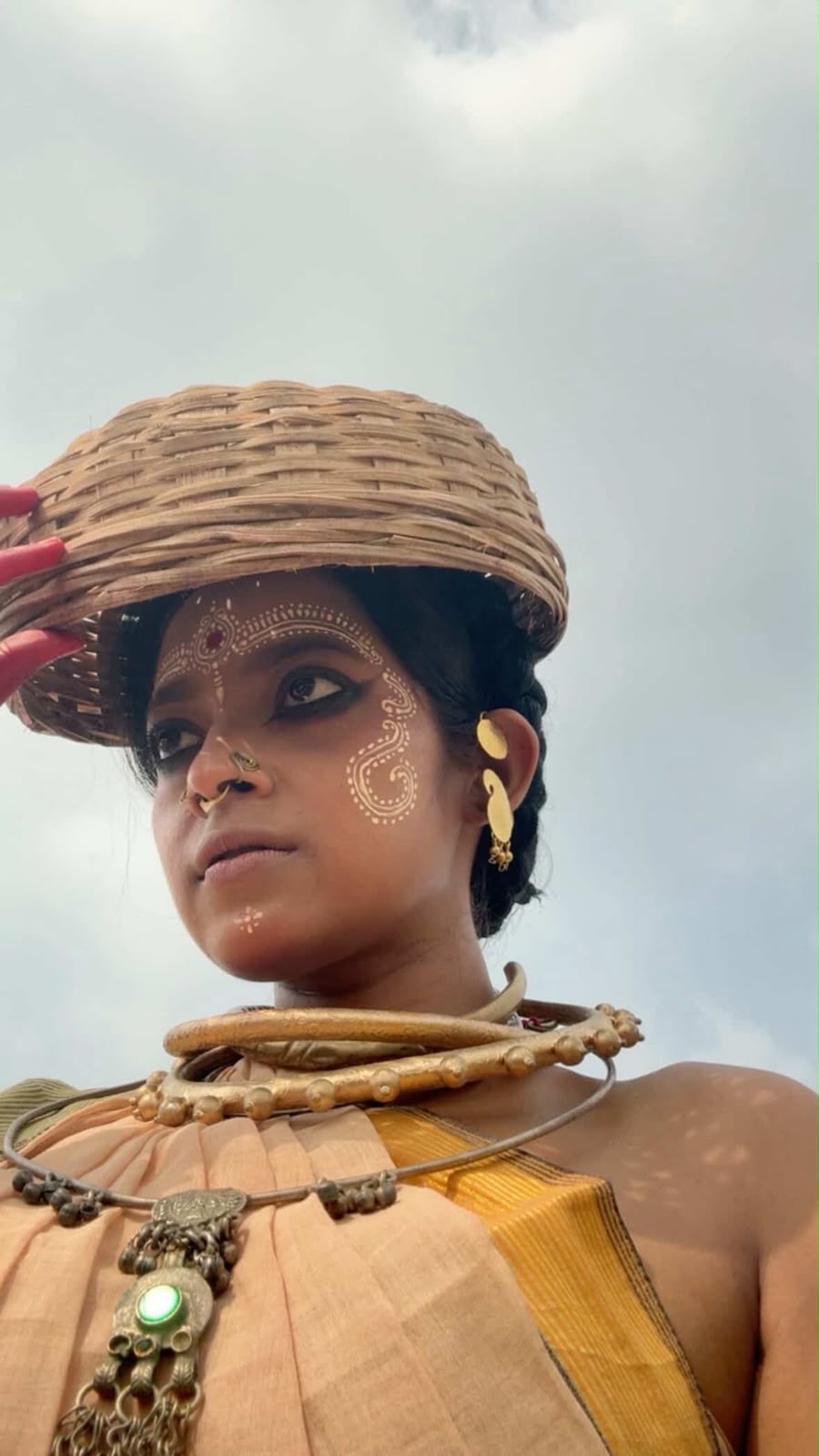
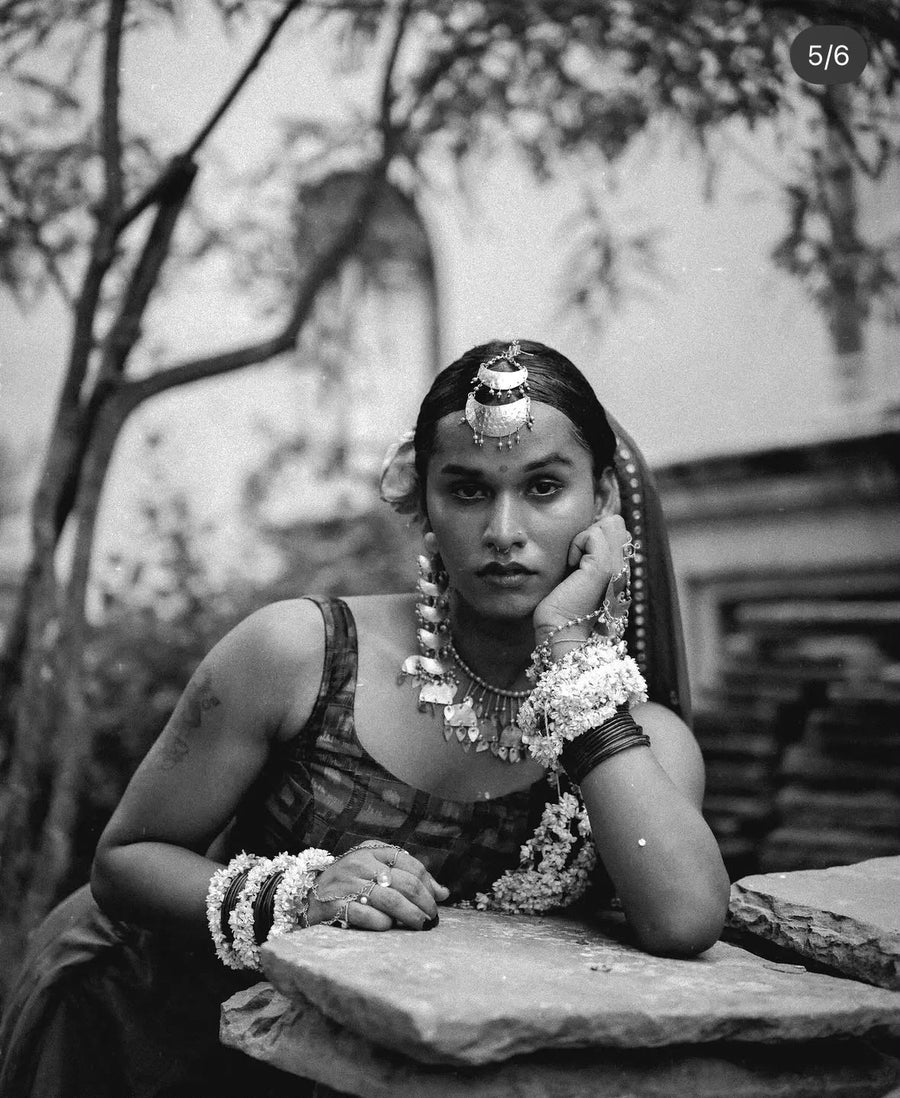
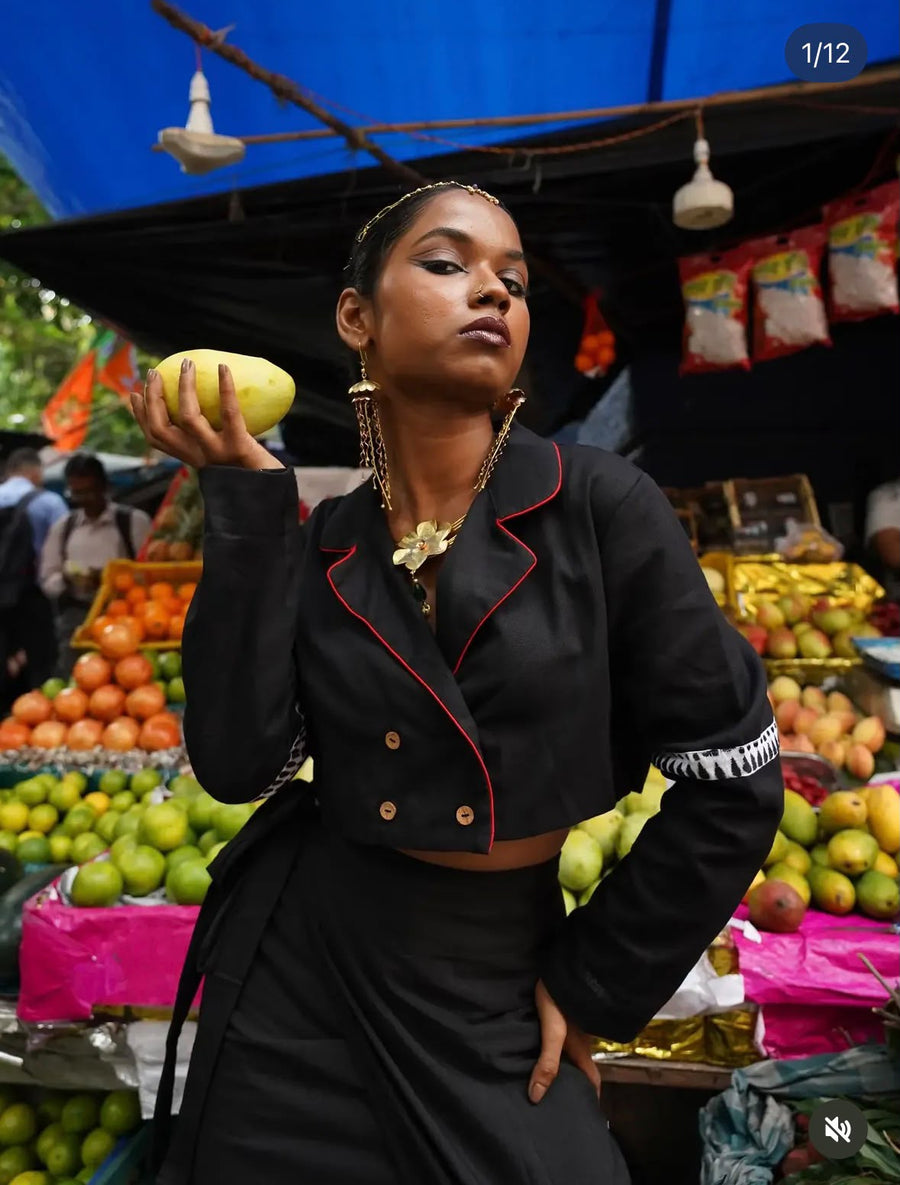
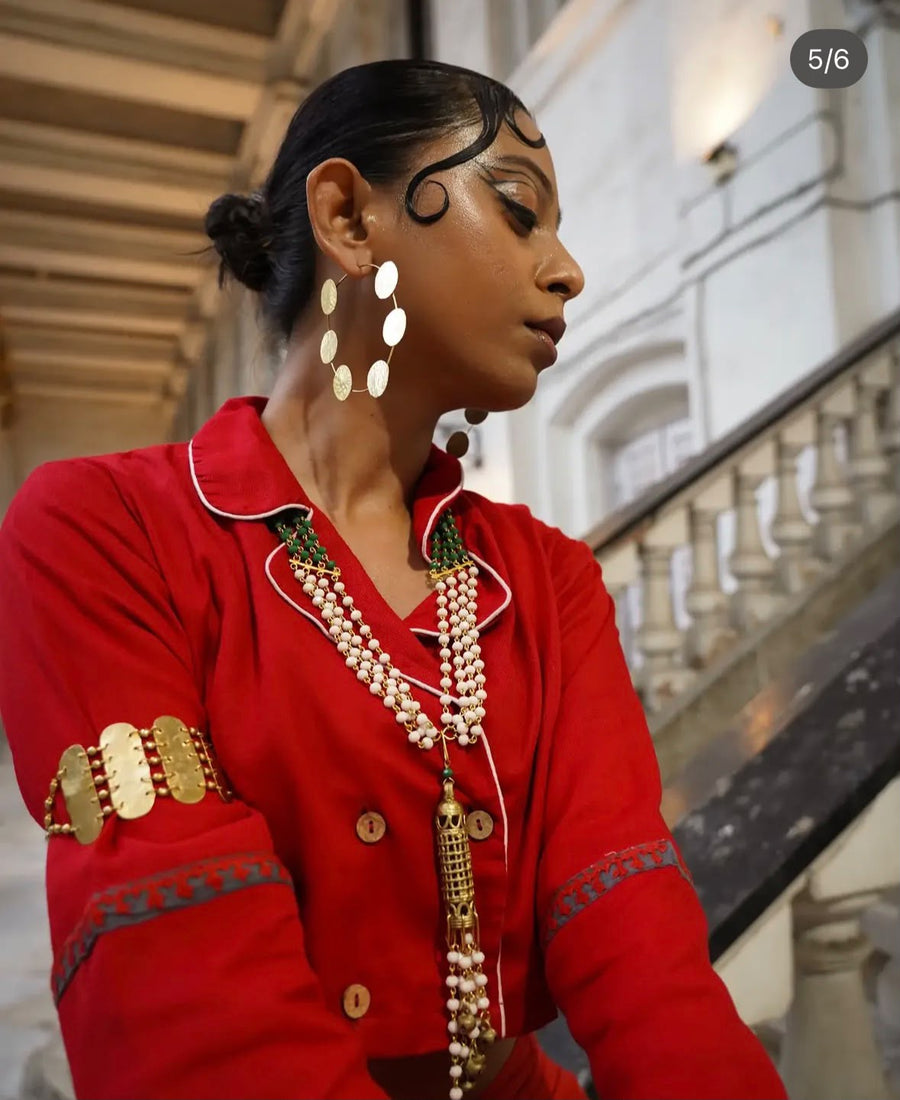
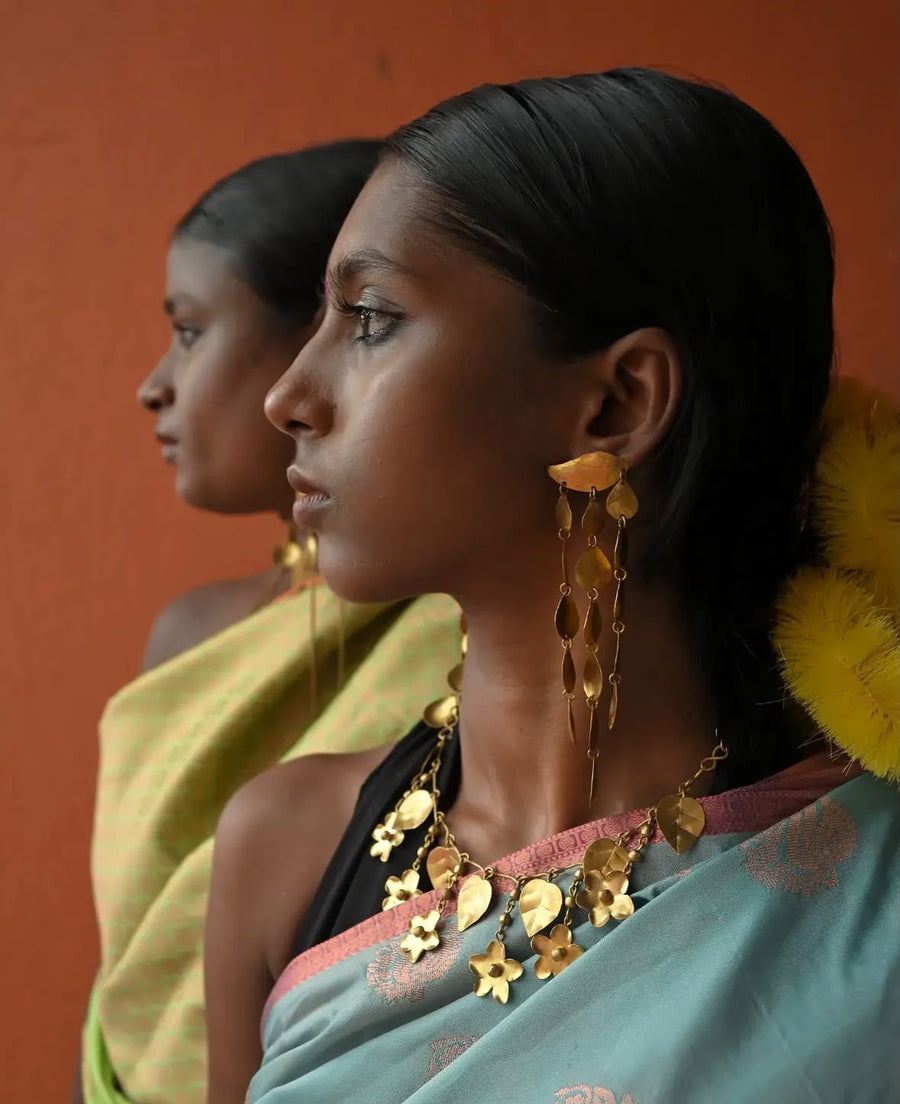
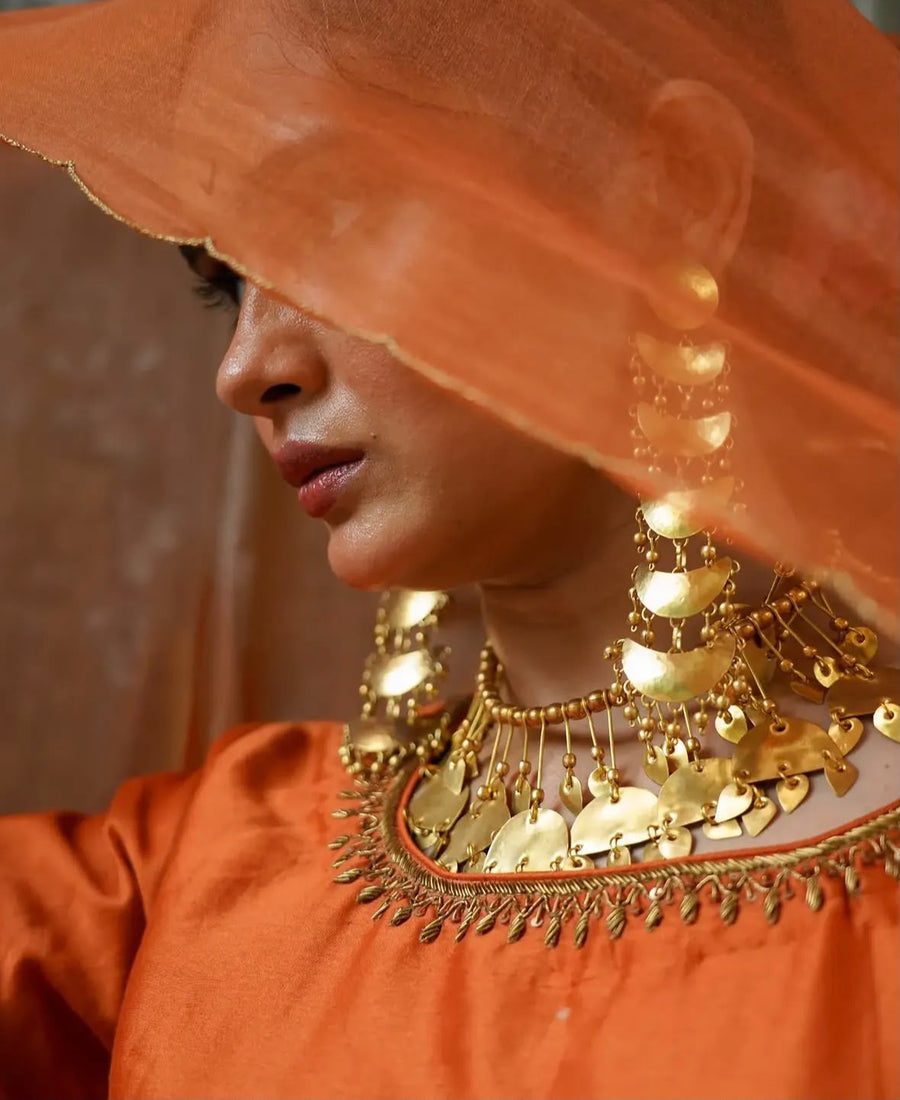
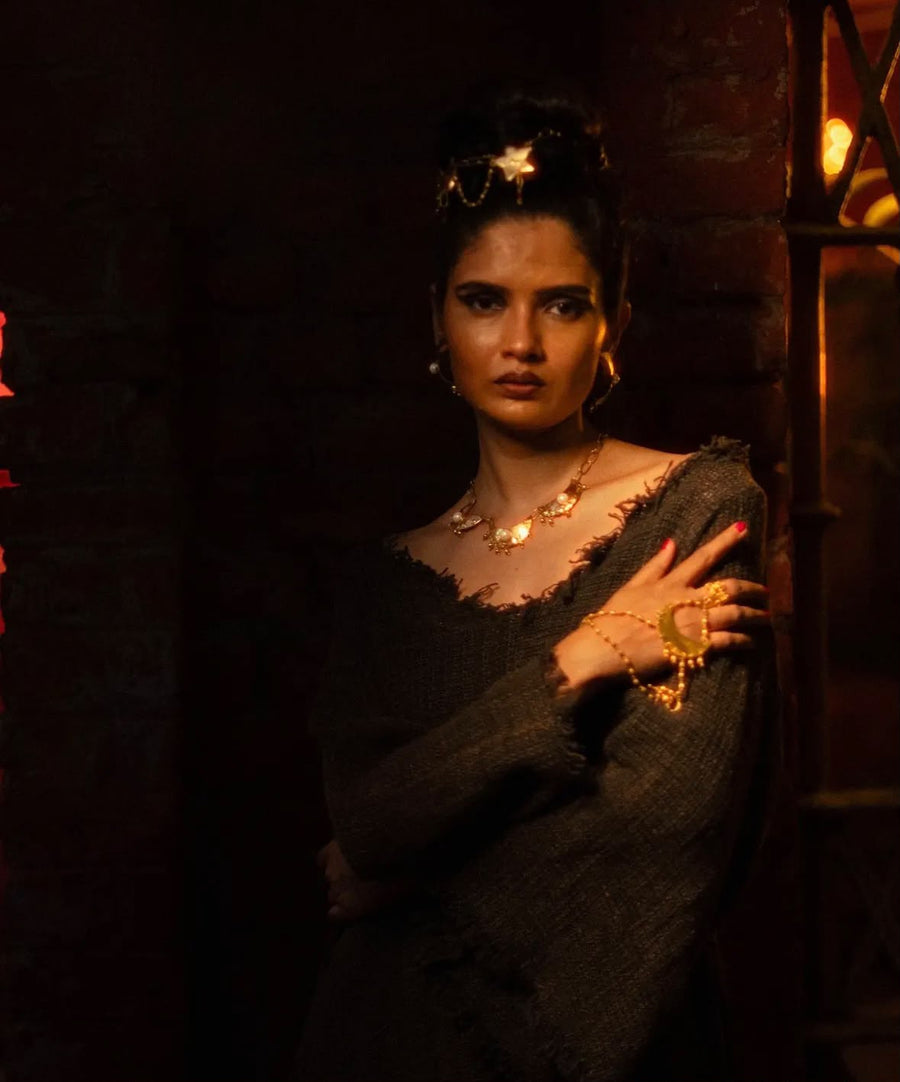
The short answer: traditional Bengali jewelry includes pieces such as the shakha and pola (conch-shell and red bangles worn by married women), the loha (iron bangle), the tikli, the chik (a close-fitting necklace), the choker, the sita haar (long necklace), the kaan pasha and jhumko earrings, and the nath. Today, many women style this heritage in a modern way with Bengal-inspired brass pieces such as the Bangaliana chik, the Shiuli choker, the Jhumkolata jhumkos and the Moner Janala set, paired with a handloom saree or even contemporary clothing.
A culture that adorns with meaning
Bengal has always loved ornament, but rarely without meaning. Jewelry here has marked the great passages of a woman's life: her wedding, her marriage, festivals such as Durga Puja, and the rituals that shape a year. It has been worn as blessing, as protection, as belonging and, of course, as pure delight.
Many of these traditions are still alive today. Walk through a Kolkata neighbourhood during Pujo and you will see them everywhere, worn by grandmothers and granddaughters alike.
The pieces that tell the story
Shakha, pola and loha
Perhaps the most recognisable symbols of a married Bengali woman are the shakha, a white bangle made of conch shell, and the pola, a red bangle traditionally made from coral or lac. They are worn together, often alongside the loha, an iron bangle, sometimes covered in gold. Together, they carry deep emotional and cultural significance in Bengali marriages.
The tikli
The tikli is a forehead ornament that rests at the parting of the hair, often worn by brides. It frames the face with delicate grace and adds a final, radiant note to the bridal look.
The chik, the choker and the sita haar
At the neck, Bengali tradition layers pieces of different lengths. The chik sits closest to the throat, the choker rests just below it, and the sita haar is a long, layered necklace that falls gracefully over the saree. Worn together, they create the richly layered look associated with a Bengali bride.
Kaan pasha and jhumko
For the ears, the kaan pasha is an ornamental earring that decorates the ear, while the beloved jhumko, the bell-shaped drop earring, sways with every movement. Few pieces feel more joyfully Bengali than a pair of jhumkos catching the light at a Pujo pandal.
The nath
The nath, a nose ring, is another traditional bridal ornament, often large and elaborate, and often connected to the ear or hair with a delicate chain.
Bengal's other great metal tradition: Dokra
Alongside gold, Bengal is home to one of India's most remarkable metal-craft traditions: Dokra, the ancient lost-wax technique still practised by artisan communities in the region. Dokra pieces carry an earthy, folk character and have long been treasured as expressive, artistic adornment. Explore our Dokra Collection to see this heritage in contemporary form.
From heritage to now: modern Bengali styling
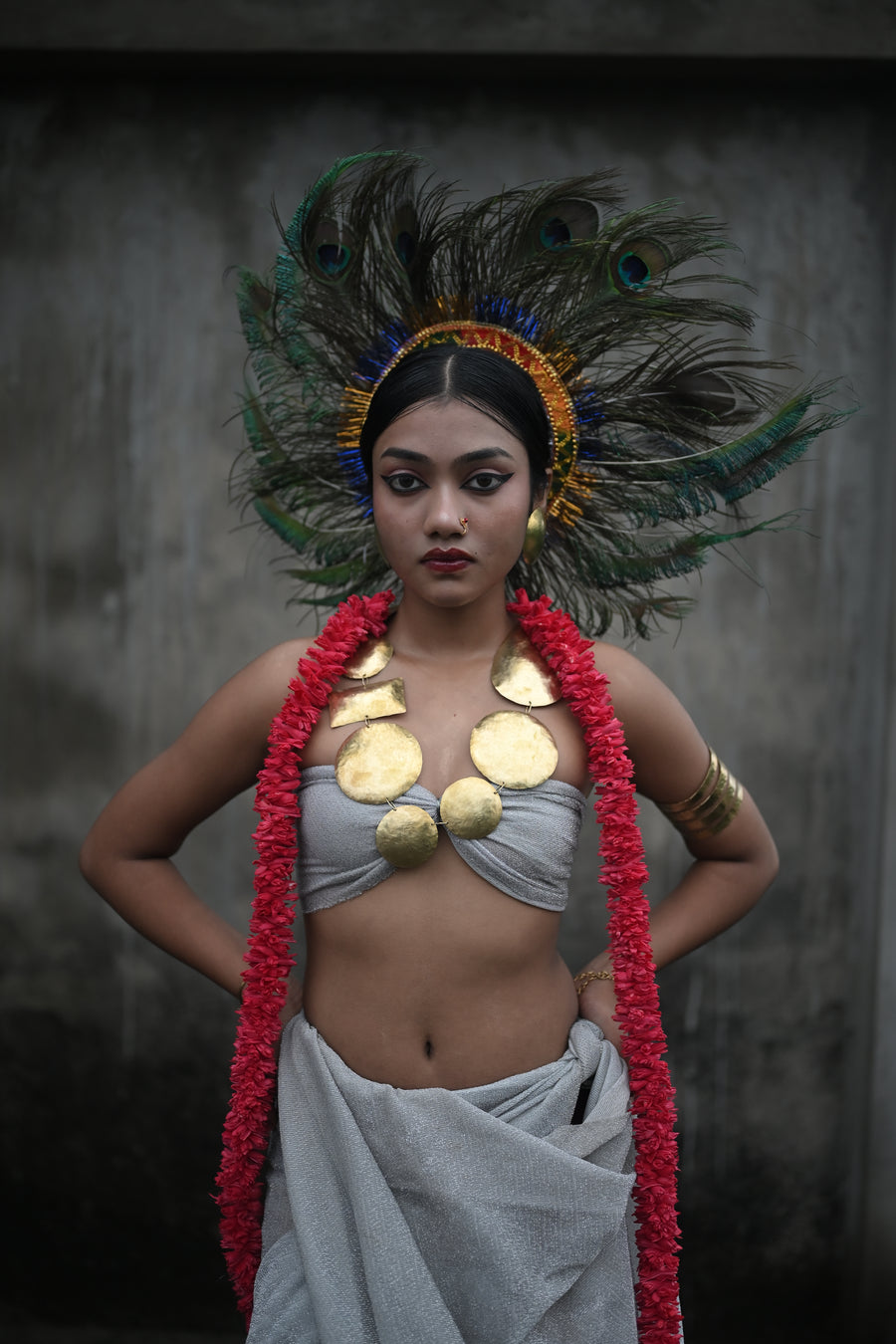
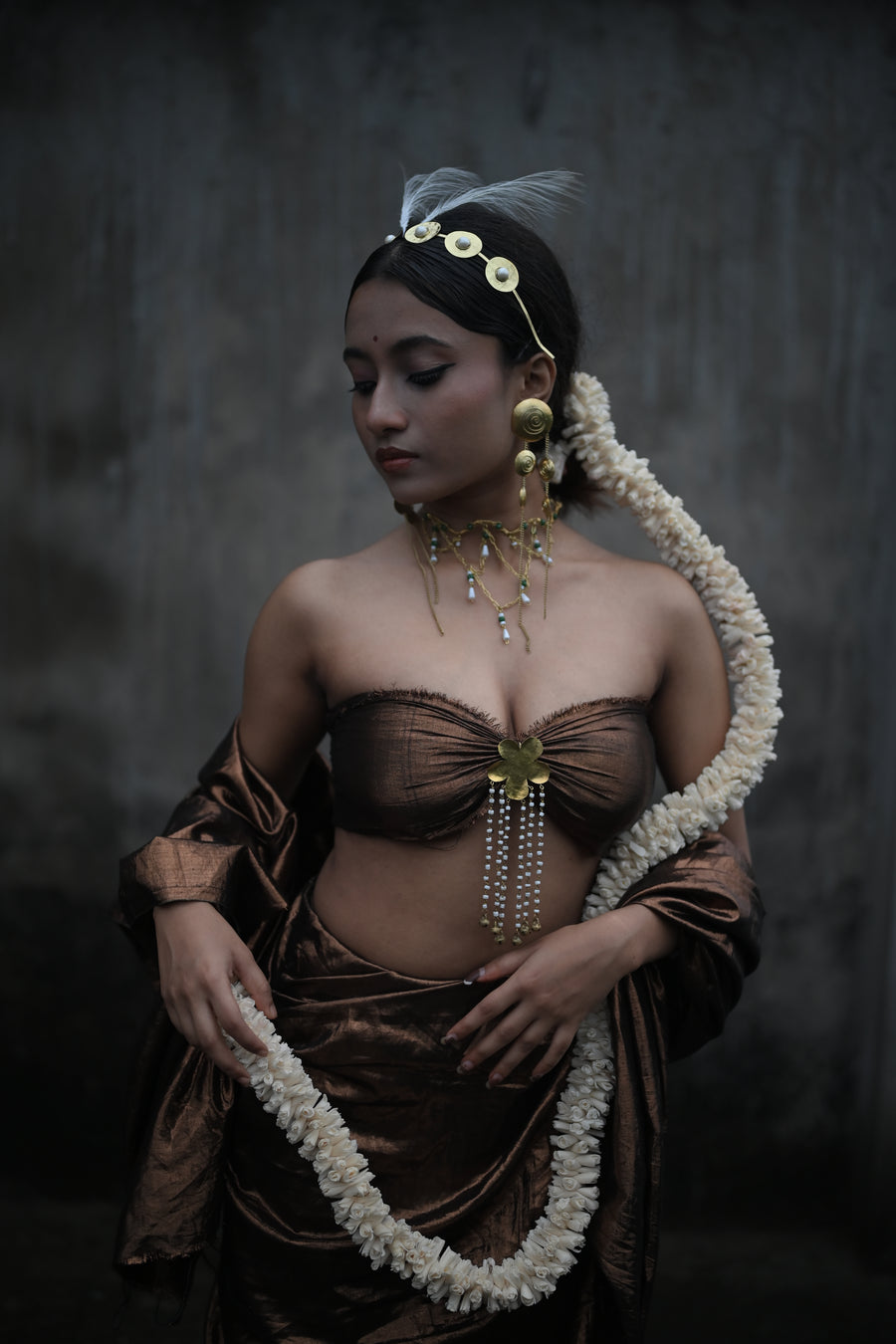
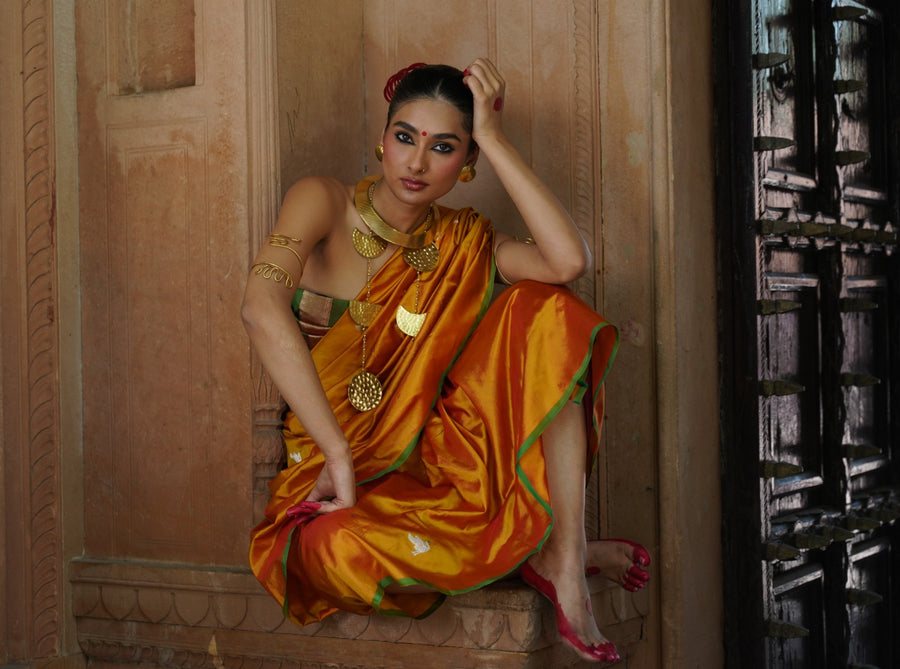
Today's Bengali woman honours tradition without being bound by it. She might wear her grandmother's shakha pola on her wedding day, and a bold sculptural brass necklace with a crisp white shirt the next week. She loves her heritage, and she makes it entirely her own.
At Quirky Kanya, born in Kolkata, Bengal is not only an influence; it is home. Several of our pieces are named after and inspired by Bengali life, language and memory, and many are contemporary reinterpretations of the traditional ornaments above. Here is how to wear them.
Bangaliana: the modern chik
Bangaliana is the untranslatable spirit of Bengaliness: the love of adda, poetry, music, food and Pujo, all at once. The Bangaliana necklace is our contemporary chik, worn close to the throat just as the traditional Bengali chik has been for generations. Choose the Bangaliana Brass Choker Necklace Jewelry Set (Necklace, Earcuffs) for a bold, complete look, or the Bangaliana Brass Choker Necklace Jewelry Set (Necklace, Stud Earrings) for something simpler at the ear.
The Bangaliana story continues beyond the neck. The Bangaliana Chained Bun Cage Brass Hair Accessory brings a festive finish to the classic Bengali khopa, or bun, while the Bangaliana Flower Brass Thin Bracelet and the Bangaliana Flower Brass Ring add delicate finishing touches.
Shiuli: the modern choker, and the flower of Pujo
For many Bengalis, autumn arrives with the fragrance of shiuli, the night-flowering jasmine whose small white-and-orange blossoms carpet the ground in the weeks before Durga Puja. It is the flower of anticipation, of homecoming, of Pujo itself.
The Shiuli Brass Statement Necklace Jewelry Set (Necklace, Earrings) is our contemporary take on the Bengali choker, carrying that memory of Pujo into brass. Layer it with the Bangaliana chik for a modern reimagining of the traditional bridal neckline, or wear it alone for Pujo evenings. For a lighter touch, the Shiuli Crystal and Brass Pendant Chain Necklace Jewelry Set is lovely for daytime anjali.
To complete the look, pair any Shiuli piece with the Shiuli Off-white & Red Hand-Embroidered Handloom Saree, a modern take on the timeless Bengali combination of white and red.
Circle of Life: the modern kaan pasha
The traditional kaan pasha adorns the ear itself, making it a canvas. The Circle of Life Brass Statement Stud Earrings are our contemporary pasha, a bold statement worn right at the ear. They pair beautifully with the Bangaliana chik or the Shiuli choker, keeping the look balanced and modern.
Jhumkolata: the modern jhumko
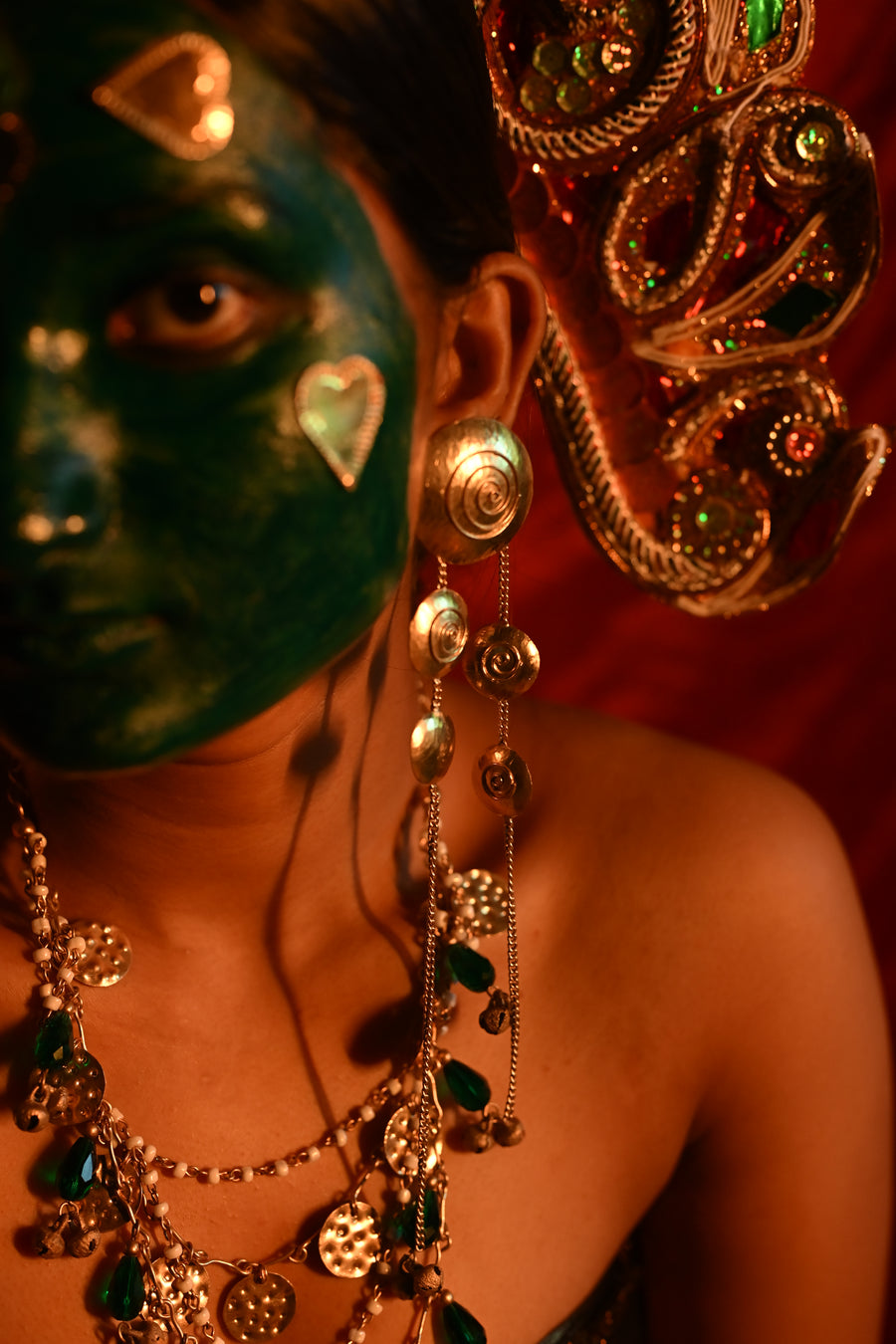
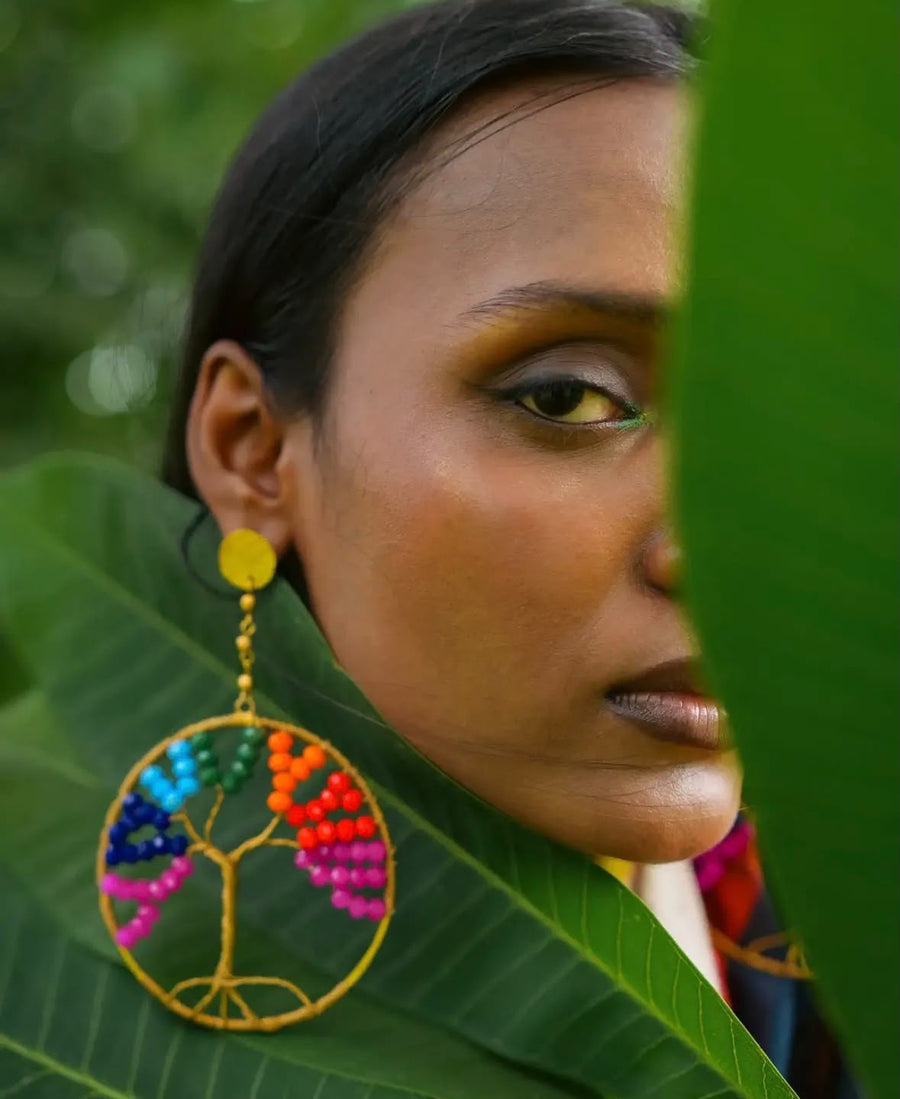
No Bengali jewelry story is complete without the jhumko. The Jhumkolata Brass Dangler Earrings take their name from the jhumkolata, the passionflower, and are our contemporary tribute to the beloved Bengali jhumko. Wear them with a handloom saree for Pujo pandal-hopping, or with a simple kurta for an afternoon adda.
The Fish Nosering: the modern nath
In Bengal, the fish is far more than food; it is a symbol of prosperity and good fortune, woven into wedding rituals and everyday life alike. The Fish Brass Nosering (Piercing) is our contemporary nath, bringing that beloved Bengali motif to the face. Where the traditional nath is large and elaborate, this modern version is a lighter, everyday way to wear the tradition, lovely with a handloom saree on Pujo mornings or with a simple kurta any day of the week.
Moner Janala: the window of the heart
Moner janala means the window of the mind, or of the heart. The Moner Janala Premium Sculptural Brass Necklace Jewelry Set takes its inspiration from the ornate open windows of traditional Bengali houses, the janala through which so many afternoons, conversations and daydreams have passed. Worn with a simple handloom saree, it tells the story of home in a completely modern language.
For a smaller gesture, the Moner Janala Premium Sculptural Brass Brooch carries the same motif, pinned to the pallu of a saree, the lapel of a blazer or the shoulder of a kurta.
Pair heritage with the unexpected
The most modern way to wear Bengali-inspired jewelry is with the unexpected. Try the Moner Janala necklace with a black slip dress, the Bangaliana chik with a crisp white shirt, or Jhumkolata earrings with a denim jacket. The warmth of brass and the memory it carries give contemporary clothing a sense of place and personality.
For Pujo: red, white and brass
The classic Bengali combination of a white saree with a red border is timeless for Durga Puja. Pair it with a coordinated jewelry set in naturally polished brass for a look that feels rooted and fresh at once. The golden glow of brass sits beautifully against both red and white.
Carrying the trunk forward
The jewelry in your grandmother's trunk was never meant to stay there. It was meant to be worn, remembered and reimagined. Traditional Bengali jewelry will always hold its place at weddings and Pujo. But its spirit, the love of meaning, craft and beautiful form, lives on in every modern piece that carries a little of Bengal within it.
Discover Bengal-inspired designs in Navya - The Atelier Edit, explore the Festive Edit for Pujo and wedding season, or browse our jewelry sets.
Frequently asked questions
What is traditional Bengali jewelry?
Traditional Bengali jewelry includes shakha and pola bangles, the loha, the tikli, the chik, the choker, the sita haar, kaan pasha and jhumko earrings, and the nath, many of which are worn by Bengali brides and married women.
What are shakha and pola?
Shakha is a white conch-shell bangle and pola is a red bangle traditionally made from coral or lac. They are worn together by many married Bengali women.
What is a chik in Bengali jewelry?
A chik is a traditional Bengali necklace worn close to the throat, often layered with a choker and a long sita haar. The Bangaliana Brass Choker Necklace is a contemporary brass chik.
What is a kaan pasha?
A kaan pasha is a traditional Bengali ear ornament. The Circle of Life Brass Statement Stud Earrings are a modern take on the pasha.
What is a nath in Bengali jewelry?
A nath is a traditional nose ring worn by Bengali brides. The Fish Brass Nosering is a modern, everyday take on the nath, featuring the fish, a Bengali symbol of prosperity.
How can I style Bengali jewelry in a modern way?
Choose one striking Bengal-inspired piece, such as the Bangaliana chik, the Shiuli choker or Jhumkolata jhumkos, and pair it with a handloom saree or contemporary clothing, keeping the rest of your look simple.
What jewelry should I wear for Durga Puja?
With a traditional red-and-white saree, try the Shiuli choker with Jhumkolata earrings, or a Bangaliana set, for a festive look that feels both rooted and modern.